Branding
How to Put Your Logo on Your Soap: A Guide to Custom Branding
Hand-stamping vs custom logo soap moulds — how each method works, what it costs in time, and which gives handmade soap a professional, retail-ready finish.
· 3 min read
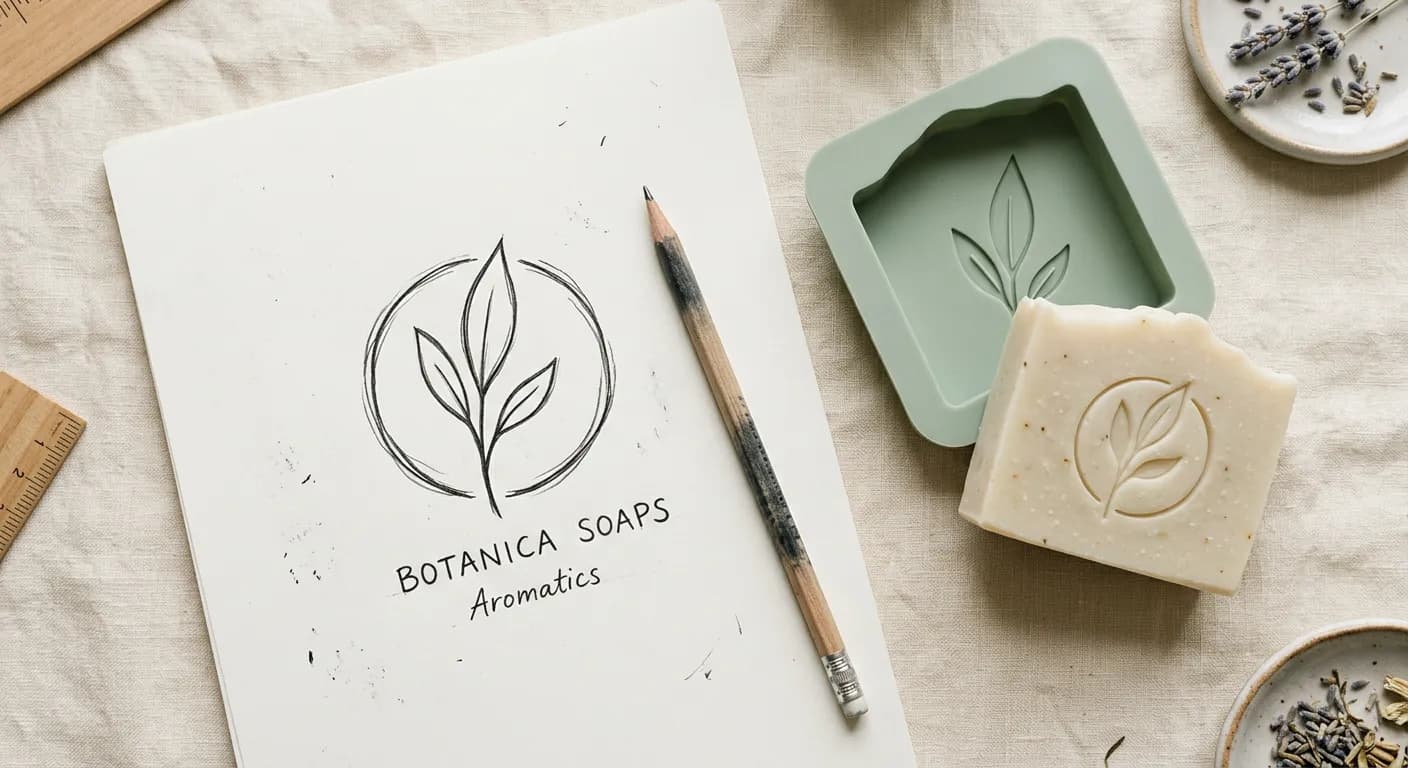
Plain bars sell at markets. Branded bars sell in shops, gift boxes and hotel bathrooms. When a soap business moves from generic bars to a recognisable brand, putting a logo on every bar is usually one of the first steps, because the logo stays with the product after the packaging has gone in the bin.
There are two main ways to do it: stamp each bar by hand, or pour into a mould that already has your logo in it. Both work. Which one suits you depends on how many bars you make and how consistent they need to look.
Option 1: Hand-stamping loose soap
A soap stamp is a small block with your design on the face. You press it into each bar once the soap has set but is still soft enough to take an impression.
What it's good for
- Loaf soaps that you cut into bars
- Small or occasional batches, seasonal editions and test recipes
- Adding a mark to soap you've already poured in your existing moulds
The trade-offs
- Timing is everything. Stamp too early and the soap sticks or smears. Stamp too late and the impression is faint. The window changes with every recipe.
- Every bar is slightly different. Depth, angle and position vary with your hand pressure, which matters when bars sit side by side on a shelf.
- It adds a step to every bar. Ten bars is quick. Three hundred bars for a wholesale order is an afternoon.
Option 2: A custom logo soap mould
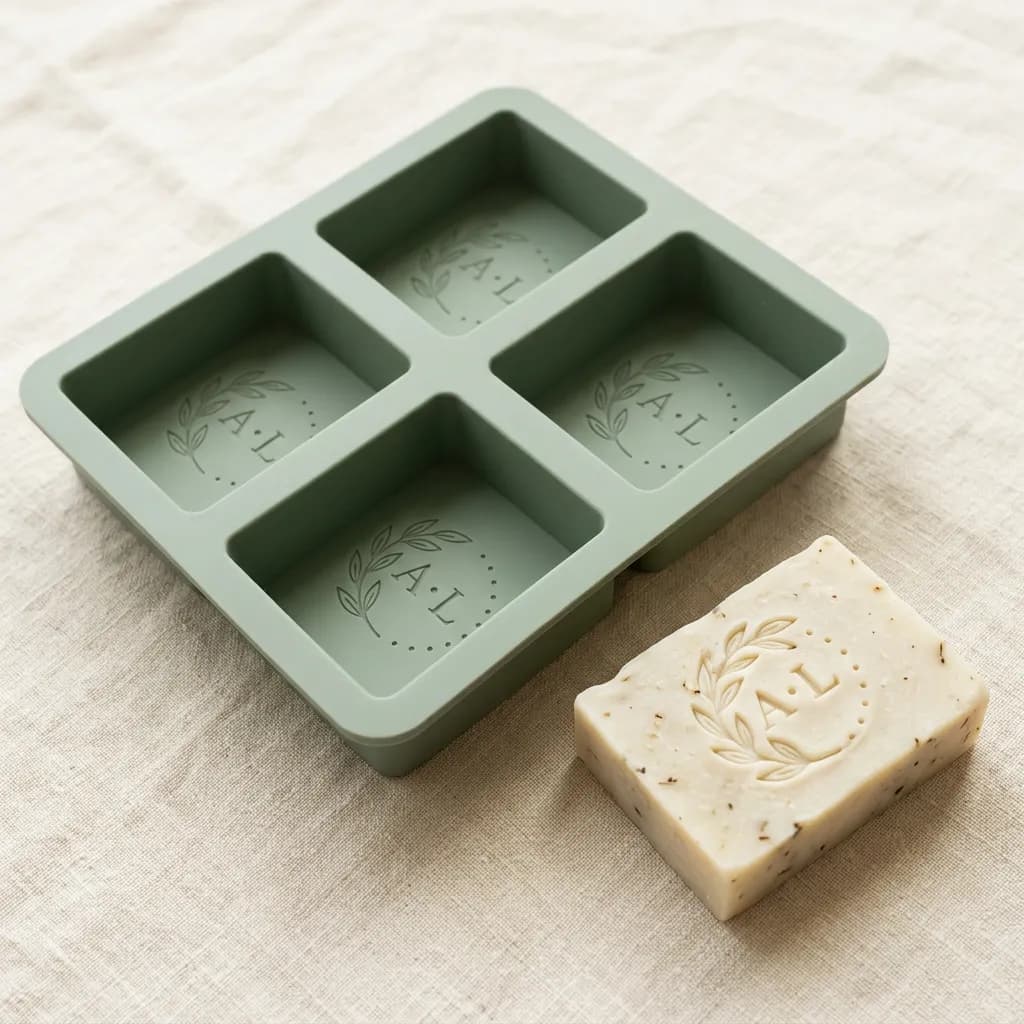
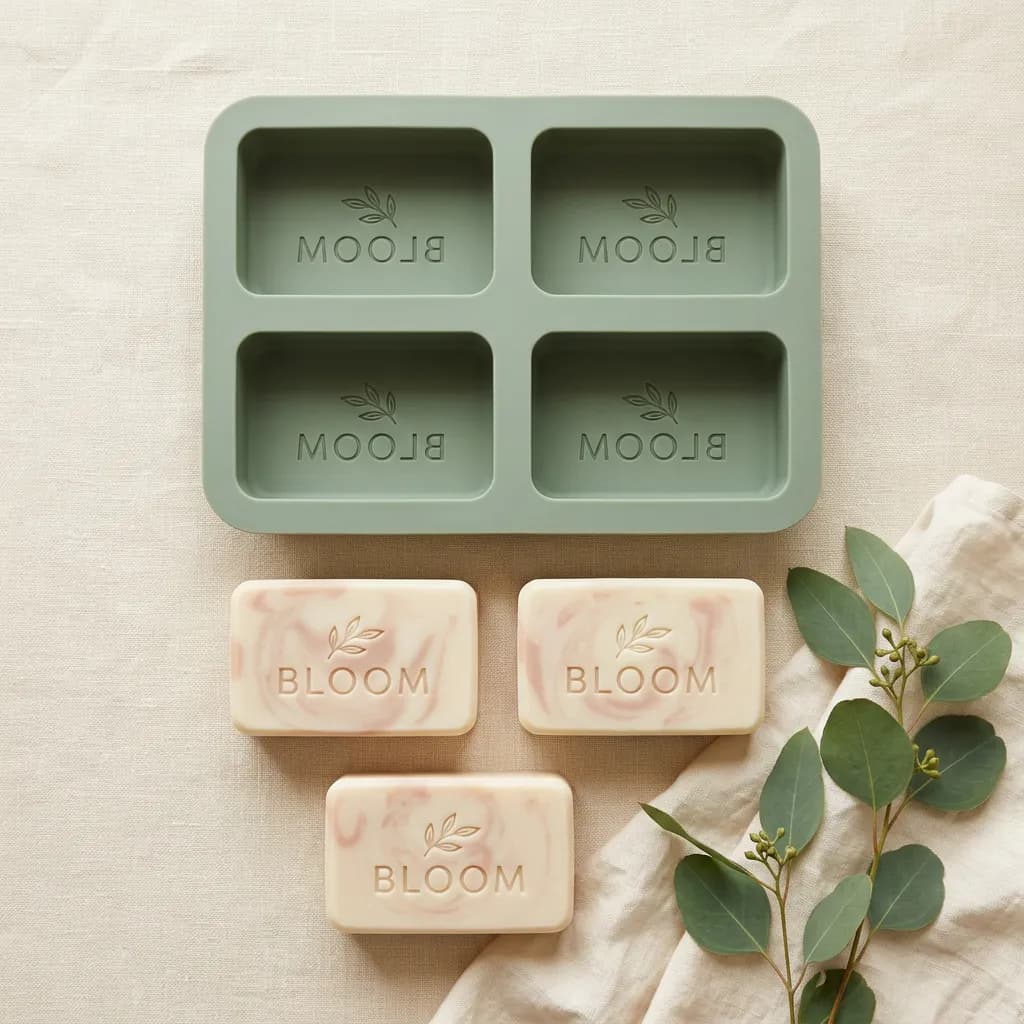
With a custom silicone mould, your logo is built into the base of every cavity. You pour as normal, and each bar comes out already branded. There's no extra step.
Why soap businesses switch
- Identical bars, every batch. The logo sits in the same place, at the same depth, on every bar. That consistency is what makes a range look professional on a retail shelf.
- Faster production. Pour, set, unmould. Branding happens at the same moment the bar is shaped, so a multi-cavity mould brands a whole batch at once.
- Sharper detail. A mould takes the impression while the soap is liquid, so it fills fine lines and small lettering that a stamp pressed into set soap can miss.
- A shape that's yours. You choose the bar shape, size and depth as well as the logo, so the whole bar becomes part of the brand.
The trade-offs
- It's an upfront investment compared with a stamp.
- It suits poured bars. If you make loaf soap and cut it, a stamp is still the better tool.
Which should you choose?
| Hand stamp | Custom logo mould | |
|---|---|---|
| Best for | Loaf soap, small runs | Poured bars, regular production |
| Consistency | Varies bar to bar | Identical every bar |
| Time per bar | Extra step each time | No extra step |
| Fine detail | Good, depends on timing | Excellent |
Many soap makers use both: a custom mould for their core range, and a matching soap stamp with the same design for loaf soaps and limited editions.
Getting your logo ready
Whichever method you pick, your artwork makes a difference:
- Keep it bold. Lines thinner than about 1 mm and very small text can soften once soap is poured into them.
- Vector files work best. An SVG or PDF gives the sharpest result and the fastest turnaround.
- Don't worry about mirroring. Send your logo the right way round. We mirror it for the mould so it reads correctly on the finished bar.
Before anything is made, we send you a proof to approve, so you can see exactly how your logo will look.
Ready to brand your bars?
Design your custom soap mould and see a live preview of your logo on the bar in seconds. If you're still deciding on the finish, read our guide to engraved vs raised logos.